

NotesCraft
The saveiros of Cajaíba
On the far side of Camamu Bay, wooden boats are still built by hand.
On the shore of Camamu Bay opposite the peninsula lies Cajaíba. The name appears seldom on travel maps, and often on the lips of those who know boats. Wooden saveiros and schooners are still built there, by hand.
The saveiro is the traditional boat of Bahia: a wooden hull, a sail, built to carry cargo. For a long time it was the saveiro that linked the shores of Bahia's bays, taking people and goods from one port to the next. Roads and engines came, and the saveiro grew scarce. At Cajaíba, the craft of building it never stopped.
A traditional boatyard looks nothing like a factory. It is a stretch of shore, with the hull under construction propped on land, close to the water. The timber is chosen piece by piece, because each part of the boat calls for a curve, and the curve comes from the tree. What one sees is a skeleton slowly gaining its skin.
The names of the parts are a language of their own: keel, frames, stem. Anyone listening to two shipwrights talking understands half. The other half is gesture.
The one who directs the work is the master. In traditional building, the drawing matters less than the measure held in memory, the template, the eye. Knowledge passes from the one who knows to the one who helps, in the yard itself, over years. Not by chance, the boatbuilding of Cajaíba has been the subject of university research: it is a knowledge that lives in people.
A wooden boat takes the time it takes. Neither the seasoning, nor the fitting, nor the caulking can be hurried. Those who commission one know this, and wait. There is a lesson in it that holds beyond the boatyard: certain things only turn out well when nobody is in a hurry.
Certain things only turn out well when nobody is in a hurry.
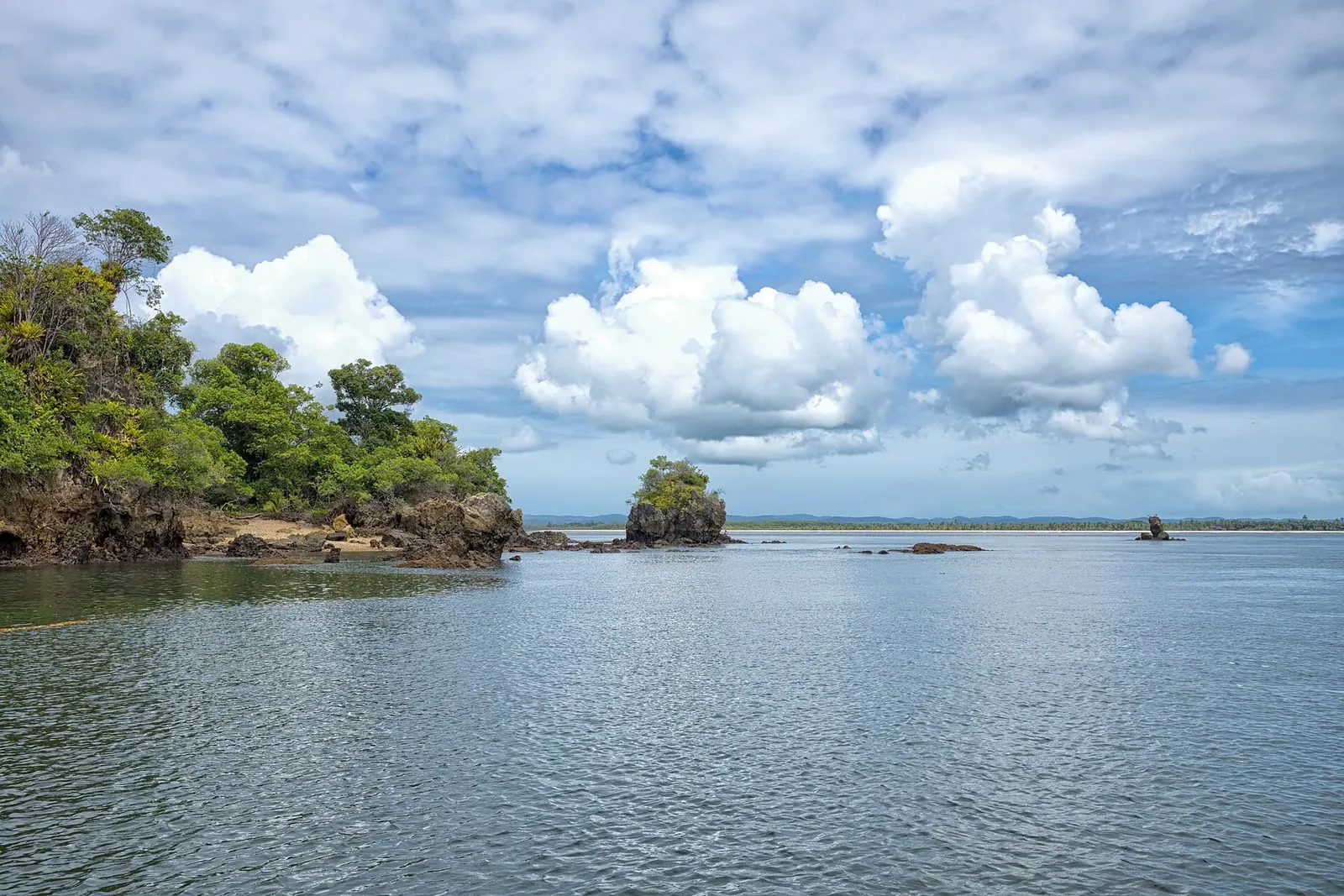
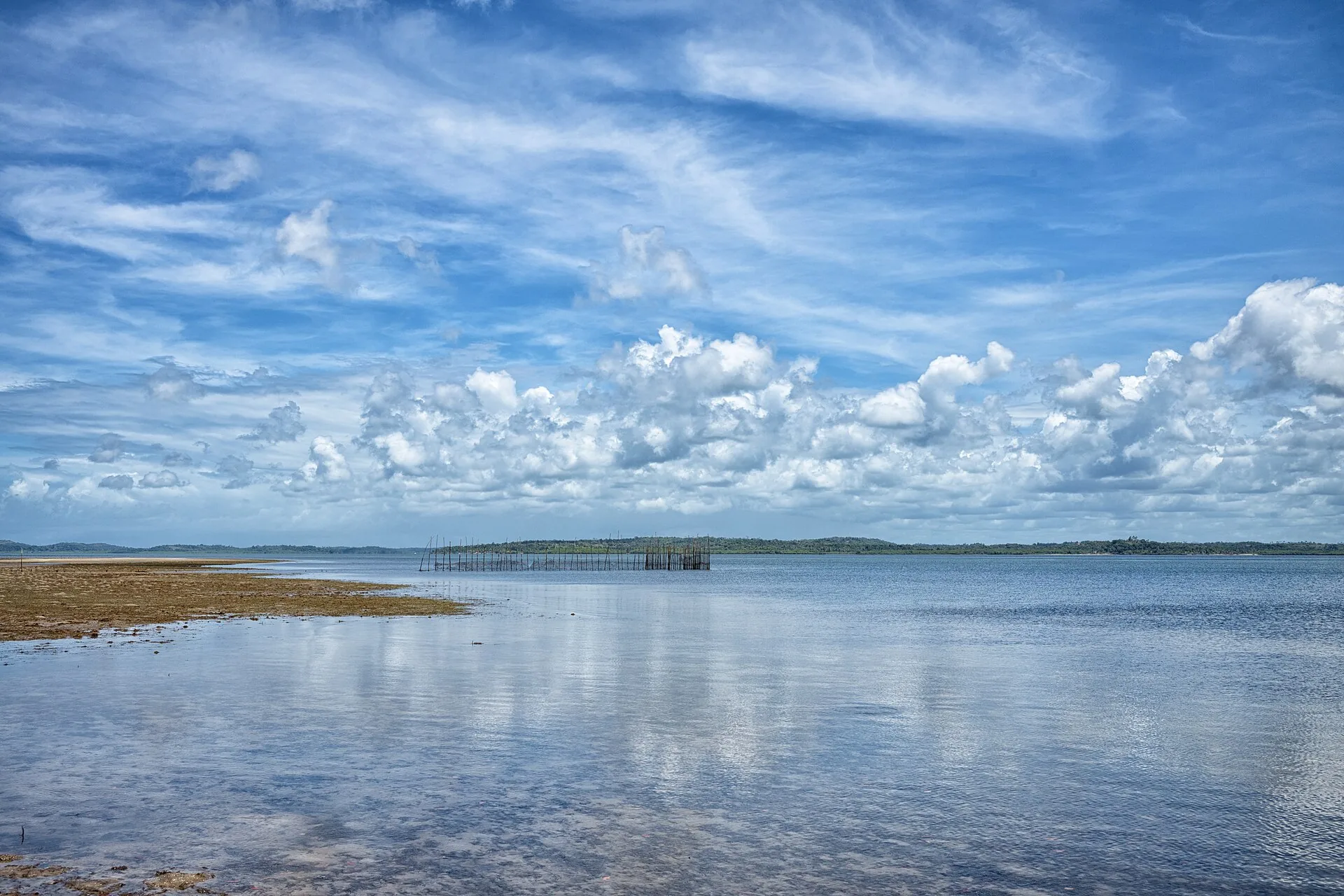
From the peninsula, Cajaíba is a presence, even for those who have never been. Anyone crossing the bay who sees a wooden schooner go by may be looking at work from that shore. The boat arrives before the name does.
Arriving later, in such a place, obliges one to know who was already there. Before any summer visitor reached the peninsula, there were people building boats on the bay. The craft is older than tourism, and does not depend on it. It deserves the respect owed to whatever was not made to be looked at.
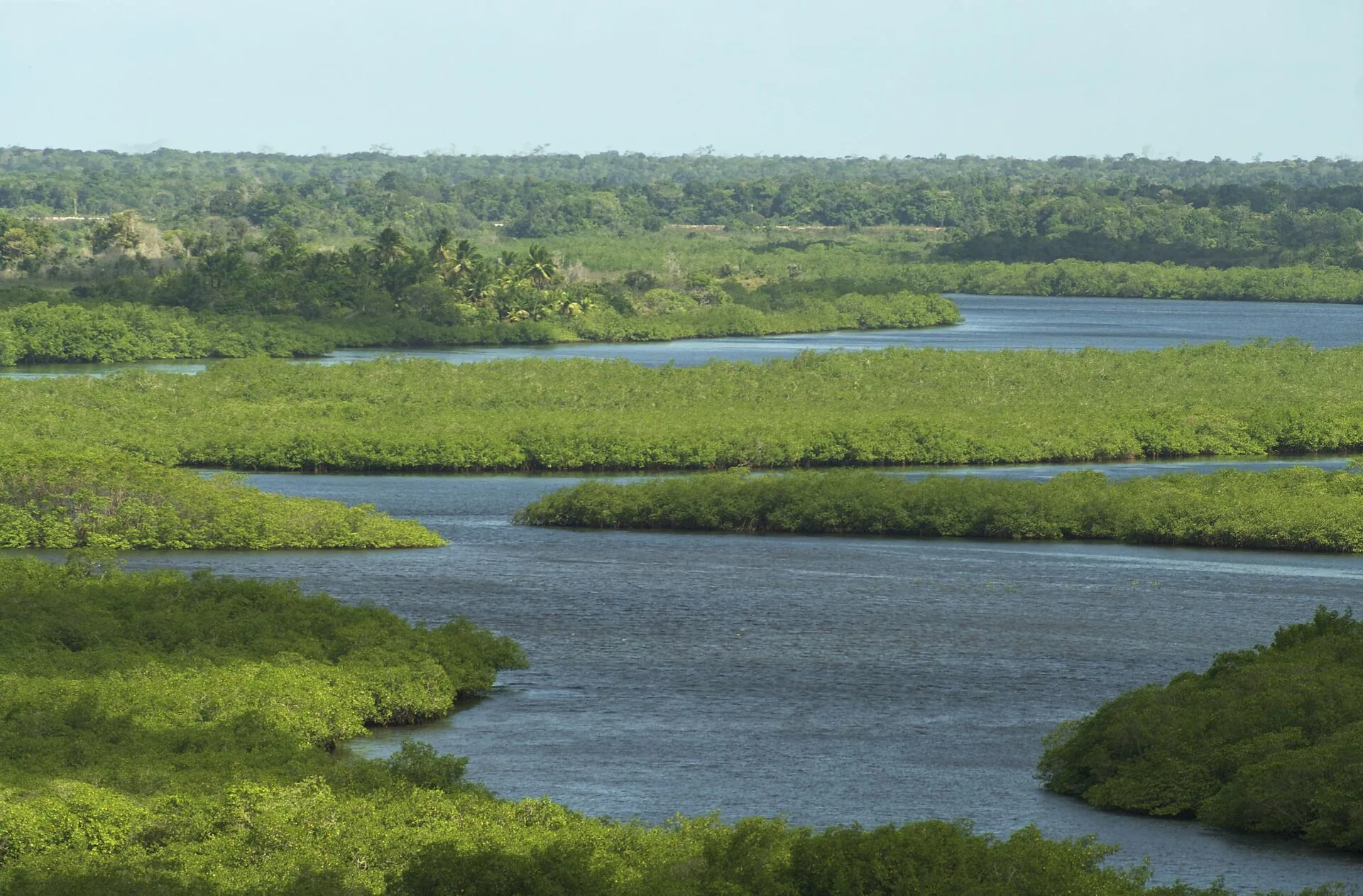
Camamu Bay is one of the largest in Brazil, and remains, to a large extent, a road of water. For as long as it does, someone will need to know how to build a boat. At Cajaíba, they know, and they go on teaching it.
Other Notes
The river of the manatee
On the Tatuamunha, the gentlest animal of the coast has a river again.
Read
The coconut palm came from elsewhere
The tree that seems to have been born with the coast arrived by ship, in 1553.
Read
Returning
To go is to get to know a place. To return is something else.
Read